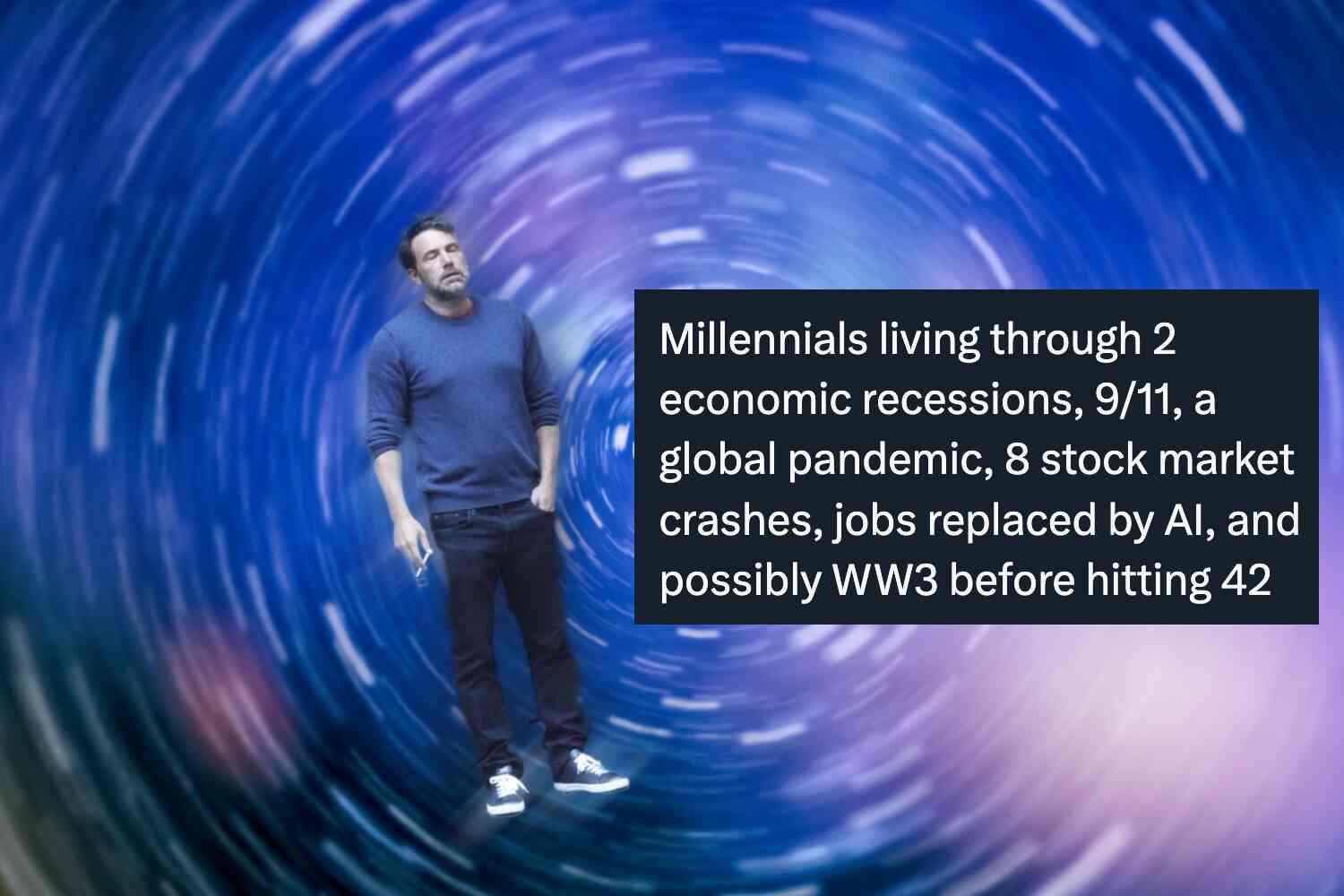

A viral post from the X account "Not Jerome Powell" recently laid out the millennial résumé of chaos:
It's a humorously disconcerting post that hit home for a lot of people. And there's no denying that's quite a list, and that millennials have lived through some wild times.
But zoom out just a little and history offers some helpful perspective. My grandparents came of age under global threats that make even the most intense doomscrolling session today look mild.
They didn't deal with a bad housing market, they dealt with the Great Depression and its 25% unemployment.
They didn't deal with theoretical "food insecurity," they dealt with real starvation.
They didn't face rising global tension, they watched World War II consume multiple continents, and then got drafted to go liberate them.
Before them, my great-grandparents' WWI generation lived through trench warfare and a global flu that, with all due respect to Covid, killed 50 million people.
Before them, America lost 2% of its population in a Civil War that ripped the country in half.
So while all of us have every right to feel stressed, catastrophes aren't unique to one age group. History is basically a highlight reel of disasters with small breaks for catching our collective breath.
What's changed is not the presence of crises, but the conditions in which this generation experiences them.
Two shifts in particular make all the difference:
1. Social media turns every crisis into a catastrophe you can't escape.
When Pearl Harbor was bombed 84 years ago yesterday, Americans were confronted with the news on the radio and in the newspaper. They were shaken, yes, but they weren't then force-fed 300 angles of exploding battleships, hot takes, conspiracy theories, and algorithm-optimized panic for the next 72 hours.
Today, a tragedy doesn't just happen. It consumes. We inhabit the tragedy from every angle, every perspective, every inch of our mental bandwidth. We wake up to it, eat lunch with it, go to bed with it. It's livestreamed, analyzed, politicized, memed, debunked, re-bunked, and weaponized, all before we catch our breath.
That makes everything feel exponentially heavier.
2. Our foundations are so much weaker.
The other major difference between generations is far deeper than economics or geopolitics.
Past generations, imperfect as they were, had a shared moral and spiritual grounding that simply does not exist anymore. Family, church, and community fostered and cultivated notions of duty, higher meaning, and greater purpose. It generated a sense that the world was ordered, and that suffering could be faced with hope instead of helplessness.
Today, we've traded those stabilizing institutions for entertainment, influencers, and online tribes that champion TED-Talk spirituality like:
"You do you."
"Live your truth."
"Follow your heart."
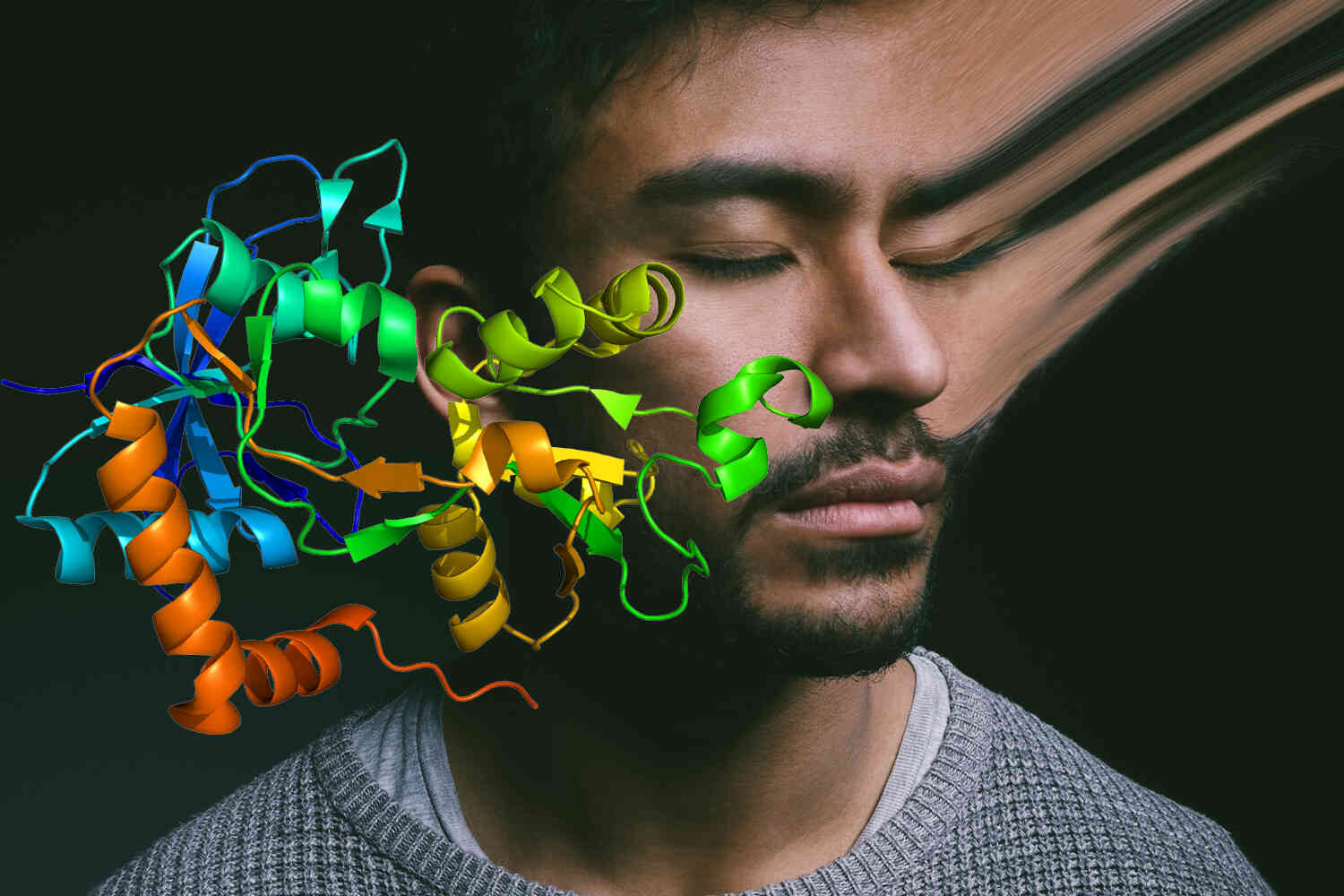
It sounds empowering until life actually hits you. Then you discover what Jesus meant about the foolishness of building your foundation on sand. Human beings who face global chaos need anchors, not vibes and self-affirmations. It's the fact that our culture has abandoned them that leaves us looking like this:

The real issue then isn't that millennials, Gen Z, or the upcoming Gen Alpha have it worse, it's that they are dealing with it unmoored.
The good news is that such a problem can be fixed. We can't stop recessions or wars or pandemics. But we can rebuild the foundations that help people endure them.
P.S. Now check out our latest video 👇
Disclaimer: The opinions expressed in this article are those of the author and do not necessarily reflect the opinions of Not the Bee or any of its affiliates.